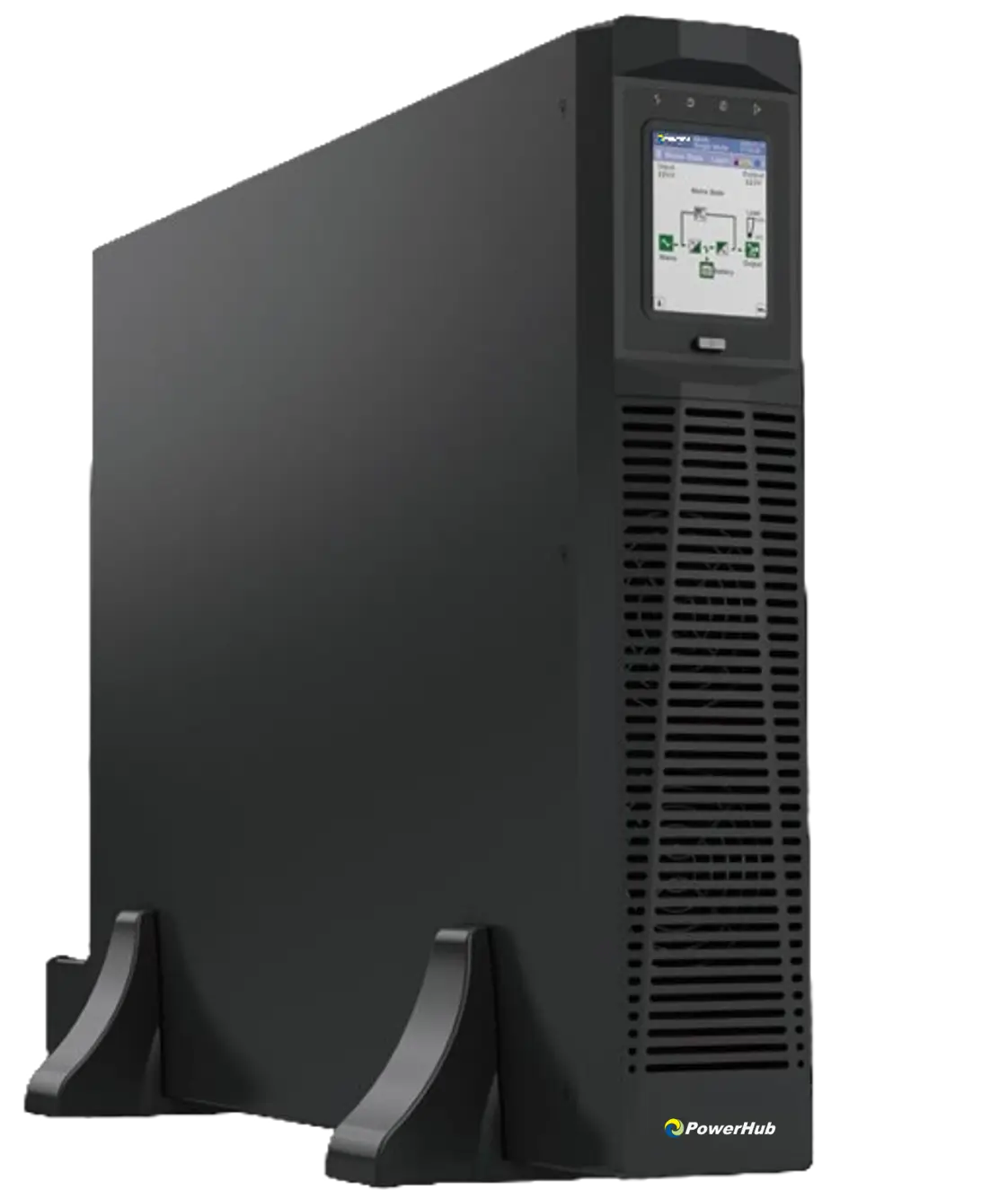
Elite V RT Li UPS Rack/Tower Convertible (6KVA to 10KVA) New
The Elite V RT Li UPS is engineered for high-performance in mission-critical environments, particularly within the 6–10kVA range that runs on either VRLA batteries or Lithium Batteries. Its robust design includes full-spectrum protection—covering overload, low battery, abnormal input, short circuits, and thermal risks—while delivering pure sine wave output for stable power. It’s an ideal solution for industries such as finance, telecom, healthcare, manufacturing, and enterprise IT.
Description
- Input Line to Line (L-L-GND) or Line to Neutral (L-N-GND) Configuration
- Wide input voltage range: 110~300Vac
- N+X parallel redundancy up to 4 units
- Online double conversion with DSP control
- 3-level inverter topology, boosting efficiency to as high as 95.5%
- Input current harmonics < 3%
- High output power factor at 1.0
- Intelligent fan speed regulation
- Multiple protection function: short-circuit, overload, overheat, battery overcharge and over-discharge, output low voltage and fan fault alarm
- Communication port: USB, Dry contact, RS485
- Optional SNMP card / Relay Card
- Input Voltage: 110–300 Vac (supports L-L-GND and L-N-GND)
- Input Frequency: 40–70 Hz (auto sensing)
- Input Power Factor: ≥ 0.99
- Input Current Harmonics: ≤ 3%
- Output Voltage: 208 / 220 / 230 / 240 Vac selectable
- Output Frequency: 50 / 60 Hz selectable
- Output Power Factor: 1.0
- Voltage Regulation: ±1% (online mode)
- Topology: Online double conversion with DSP control
- Inverter Design: 3-level inverter topology
- Efficiency: Up to 95.5% (up to 99% in ECO mode)
- Parallel Capability: N+X redundancy, up to 4 units
- Transfer Time: 0 ms (online to battery)
- Battery DC Voltage: 192 Vdc
- Charging Current: Up to 12 A
- Protection Features: Short-circuit, overload, overheat, battery overcharge & over-discharge, output low voltage, fan fault
- Communication Interfaces: USB, Dry Contact, RS485
- Optional Accessories: SNMP card, Relay card
- Cooling: Intelligent fan speed regulation
- Operating Temperature: 0°C to 40°C
- Noise Level: ≤ 55 dB @ 1 meter
- Standards Compliance:
- IEC / EN 62040-1 (Safety Requirements)
- IEC / EN 62040-2 (EMC Requirements)
- IEC / EN 62040-3 (Performance and Test Requirements)
Elite V RT Li 6KVA (VRLA Batteries)
| Configuration | 10% | 20% | 30% | 40% | 50% | 60% | 70% | 80% | 90% | 100% |
|---|
| UPS (Ext) | N/A | N/A | N/A | N/A | N/A | N/A | N/A | N/A | N/A | N/A |
| UPS (Ext) + 1 EBP | 133 min | 60 min | 36 min | 26 min | 19 min | 15 min | 12 min | 10 min | 8 min | 6 min |
| UPS (Ext) + 2 EBPs | 318 min | 142 min | 87 min | 61 min | 46 min | 37 min | 30 min | 26 min | 22 min | 19 min |
| UPS (Ext) + 3 EBPs | 520 min | 237 min | 142 min | 102 min | 78 min | 61 min | 50 min | 43 min | 37 min | 32 min |
| UPS (Ext) + 4 EBPs | 682 min | 346 min | 207 min | 145 min | 112 min | 90 min | 72 min | 61 min | 53 min | 46 min |
| UPS (Ext) + 5 EBPs | 876 min | 441 min | 280 min | 189 min | 145 min | 116 min | 97 min | 81 min | 70 min | 61 min |
Elite V RT Li 10KVA (VRLA Batteries)
| Configuration | 10% | 20% | 30% | 40% | 50% | 60% | 70% | 80% | 90% | 100% |
|---|
| UPS (Ext) | N/A | N/A | N/A | N/A | N/A | N/A | N/A | N/A | N/A | N/A |
| UPS (Ext) + 1 EBP | 73 min | 32 min | 19 min | 13 min | 9 min | 6 min | 5 min | 4 min | 4 min | 3 min |
| UPS (Ext) + 2 EBPs | 174 min | 76 min | 46 min | 32 min | 25 min | 19 min | 16 min | 13 min | 11 min | 9 min |
| UPS (Ext) + 3 EBPs | 292 min | 125 min | 78 min | 54 min | 41 min | 33 min | 27 min | 23 min | 19 min | 17 min |
| UPS (Ext) + 4 EBPs | 417 min | 179 min | 112 min | 78 min | 58 min | 47 min | 39 min | 33 min | 28 min | 24 min |
| UPS (Ext) + 5 EBPs | 520 min | 237 min | 145 min | 102 min | 78 min | 62 min | 50 min | 43 min | 37 min | 32 min |
Runtime figures are typical battery backup times in minutes at the stated load. EBP = External Battery Pack.
Disclaimer: The runtime durations shown above are for reference only. Actual battery backup time may vary depending on the environment in which the UPS is installed, including ambient temperature, battery age and condition, and other site-specific factors.